Lancaster food-loop game
  • Blog
  • How to Play
  • Register to Play
  • THE GAME: How are you doing?
    • CUSTOMER Leader Board
    • The BIG GAME BOARD
  • Local Food Retailers
  • Terms and Conditions
  • About
  • Contact

June 07th, 2016

6/7/2016

0 Comments

 
Encouraging Local Spend Through the Creation of Local Money Loops
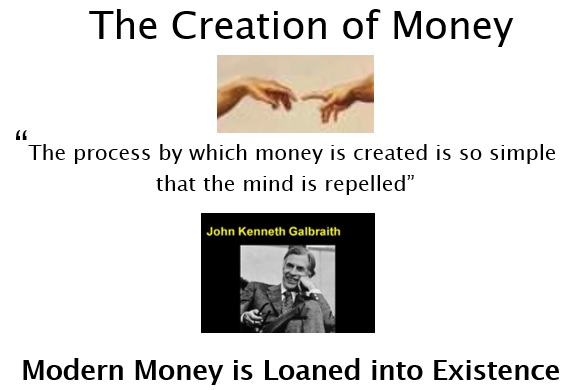
Let’s face it, most of us don’t have a clue what happens to our money once it leaves our hands, and we have even less idea where it comes from. Ultimately nearly all the money in circulation comes from banks, who are licenced by governments to lend it into existence in the form of interest-bearing loans. (That’s debts to me an you). And if you don’t believe me then just ask the Bank of England who have admitted as much.
There is effectively no limit to how much debt the banking sector is authorised and willing to lend out and, when you factor in the compound interest that banks charge us for the privilege of borrowing that money, there is little chance that it can easily be paid back under current market conditions.
Picture
This is because the expansion of debt money grows exponentially over time whilst the expansion of the real economy does not. By real economy we mean the provision of real goods and services that real living, breathing people need. The growth in the debt money supply is only limited by the laws of mathematics and computing power, which is effectively unlimited, whilst the growth of real goods and services is limited by how many calories you and I can burn, the number of hours in a day and the biological fact that we occasionally have to do something other than work.

Back in the 1930s, Henry Ford is supposed to have remarked that it was a good thing that most Americans didn't know how banking really works, because if they did, "there'd be a revolution before tomorrow morning". (Guardian 18 March 2014)
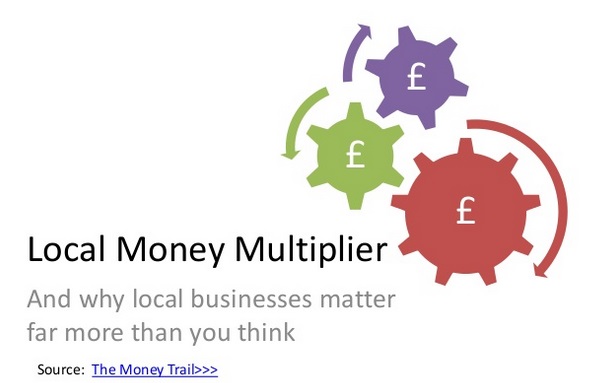
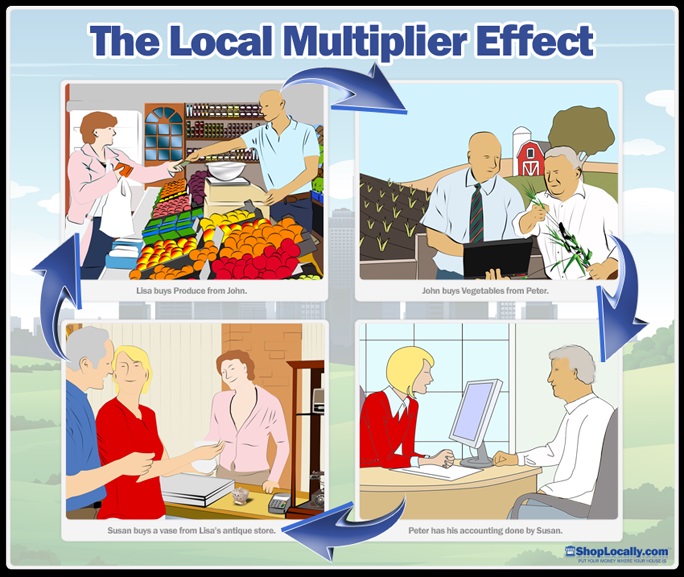
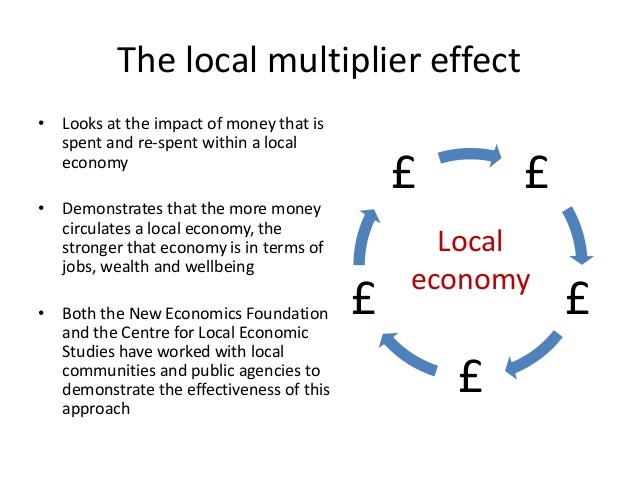
In the Lancaster and Morecambe City area we are planning our own quiet financial revolution, one clearly identified local purchase at a time. Back in the Noughties the New Economics Foundation published a report on what is commonly known as the local multiplier effect, whereby money spent with businesses that have a strong local commitment tends to stick around in the local economy for long than money spent with ‘out of town’ businesses.
Picture
This sounds intuitively correct and there have been several subsequent case studies to back this up.
The NEF went on to propose a model for tracking how much money stayed in the local area using their Local Multiplier system (LM3). Tracking local money can help people see exactly how to make their money count more than once.

For the past five years The Small Green Consultancy, (SGCo) a local ‘think tank’, has been conducting practical research into how to keep more money in the local economy and, in 2014, teamed up with LESS CIC, a local environmental social enterprise, to run a pilot project of SGCo’s local money system. This was named the local Food Loop Game.

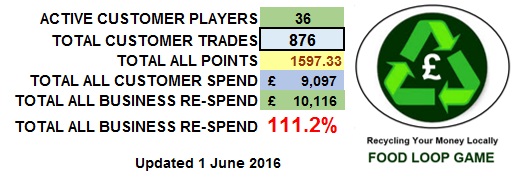
Food Loop asks customers to evidence spending with local food and drink businesses in the form of receipts, and that money is then tracked as it makes its way around the local food economy. With monthly reports on its progress. This means that customers and participating businesses get to track what their money is doing long after they have spent it.
Picture
This ‘live’ ongoing tracking of the money circulating within the local economy is a unique feature of Food Loop. Another Innovative feature is the decision to turn the whole process into a game, whereby customers become players and the money they spend is converted into points which accumulate over time. This happens the more spending evidence they provide and also each time their money changes hands again locally.

The idea is to create ongoing positive feedback for all participants that will, in turn, encourage and reward further local spending. The longer we can keep our money flowing and changing hands locally the more financial liquidity we have as a community and the less restricted cash-flow becomes a problem.

The more real goods and services we can create and exchange locally the more added values we can create and the less likely it is that we will need to go to the banking sector for additional loans (with interest). This becomes even more the case if we build durability, resilience and increased capacity use (now much a product or service does for us before we have to replace it) into the products and services we create.
Picture
Eventually we will expand the Money Loop System to other areas of the local economy. If our model takes off then, over time, we should start to see a situation in which there is an ever-increasing amount of local interest-free money in circulation (Technically the same amount of money circling very fast and not leaving the area). This would increasingly lead to a situation in which the growth and sustainable development of our local economy becomes limited not by the amount of cash in circulation, but by the limitations of our creativity and ingenuity to add real values to real goods and services.
Picture
The ‘holy grail’ of local financing will be to create a situation in which we are increasingly self-reliant on our own resourcefulness, less reliant on external funding sources and have increased decision making capacity when it comes to seeking out products, services and partners from further afield.

Michael Hallam
7 June 16


0 Comments

Local shoppers play with their food

3/18/2016

7 Comments

 
What better way to spend money with our local food and drink businesses that to turn it into a game. That’s what the GOLFE project has done with its Local Food Loop Game. The idea is that customers become players and, by submitting the receipts for their purchases, get these converted into points. And we all know what points mean. You guessed; its prizes!
Picture
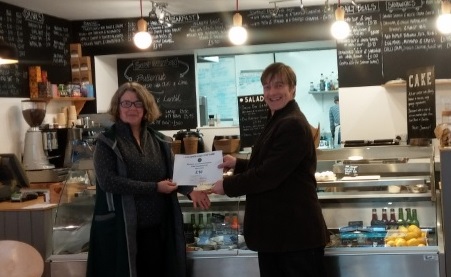
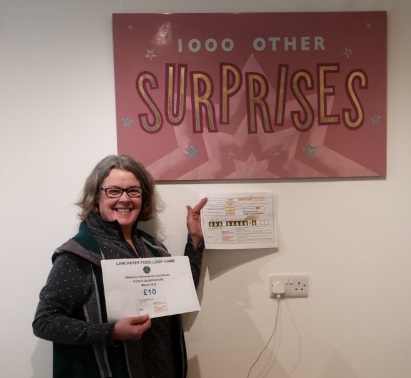
On Friday Dawn Keyse, of Halton, collected a £10 prize in the recently opened Radish café and deli in New St. Dawn received her prize for completing a challenge set within the Food Loop Game when she managed to quadruple her spending points before anyone else.

The prizes are small and just a bit of fun. The real aim of the game is to build upon the work done by the New Economic Foundation on “the local multiplier effect”. Money spent with locally owned and run businesses is likely to stay in our local economy longer.

Food loop is designed to test this by encouraging local businesses to participate in the process and demonstrate that they are managing to re-spend their customer player’s money with other local suppliers. When they do this those customers playing the game get additional points.
Picture
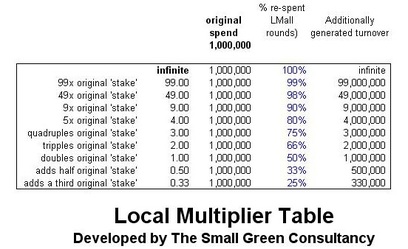
The real aim of the game is to keep our money doing good work in our own local economy for as long as we can. Current estimates put the local re-spend at 50%, which, over time will double the original amount spent.

If we can get that re-spend up to 66% we can triple the amount of cash in our local economy. At 75% re-spend the original amount is quadrupled, which means there is twice as much money moving around the local economy as usual. That’s the big prize that we are all aiming for.
Picture
At the time of going to press 28 players have spent £5,528 with 96 local food and drink businesses, and 70% of that money has be re-spent with other local food and drink businesses. This translates as an extra turnover of £3,918. The game will track this money as it is re-spent further.

Over time we expect that positive feedback like this will encourage more local businesses to source and spend locally, wherever possible.

For anyone who is interested in joining the game there is a website and a Facebook Group where you can find out more and register to get involved.
Dawn has pledge to re-spend her prize money on more delicious local food and drink.
Website: lancasterfoodloopgame.weebly.com
Facebook: MoneyLoopGame


7 Comments

We have now spent over £3,800 and local businesses have turned that into £6,100

12/15/2015

1 Comment

 
...and the money is still circulating.

In a nutshell 24 people have spent £3,800 into the local food economy over the last six months here in the Lancaster and Morecambe area. Thats with over 80 local food businesses.  Of those the most spent with, 30 businesses in all, have demonstrated that they are re-spending that money with othe rlocal suppliers.
60.9%
That represents over a 60% re-spend, bringing the total up to £6,100. Furthermore, some of those businesses that have received your re-spent oney have gone on to spend it locally again. Every time this happens it creates a further link in the local spending chain.
Picture
Over Christmas I will be crunching the fugures to show how much the further busienss 2 business spend has added to this total. And I will be looking out for the first loop. This when a certain amount of money is re-spent with someone already in the spending chain. When that happens 100% of the money is recycled without any loss outside the spending system.

To put this in context our local economy is our spending system with money constantly entering and leaving the system (imported and exported money) all the time. The more we can identify and plug the gaps the longer that money can work for local people and the local economy.
If you want to join in the process just register to take part here on the website. Simples.
1 Comment

We are starting to show a re-spend

10/20/2015

0 Comments

 
Hi Food Looper’s
 
I thought you might appreciate a little summary of activity to date:

 
31 players registered to play. 24 are active
Spent £1835 with 64 local food and drink businesses
Of those I have spoken to 10 who are evidencing a re-spend of your money.
This amounts to £690 with 8 retailers they have re-spent 100% of the money you have spent with them with other local food businesses.
The next task is to get more retailers on board and encouraging more re-spending. Then I will be following up the businesses they re-spend with and encouraging them to do the same.
Total Customer Trades to date: 234, averaging £7.84 per trade
Total Retailer Trades to date: 63, averaging £10.96.
 
Michael

0 Comments

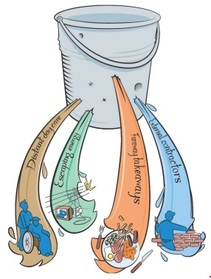
can we plug the holes in our food spending bucket?

8/23/2015

9 Comments

 
Picture
"Every time money is re-spent in your local economy, it is like new income for the person who receives it.  The more money is re-spent, the higher the multiplier effect." (1)
The Food Loop Game is inspired by the work of the New Economics Foundation on the multiplying power of active re-spending.
The premise is that the more actively we try to spend and re-spend our money locally the more money there is around for people to continue spending.

Whilst the principle is very simple, no-one has managed to really track the local spend and re-spend in near real time. The FLoop Game is designed to do that, or at least attempt to do it. If it works we will be breaking new economic ground, which should bring its own benefits in terms of attention from other places. 
And, as any business person knows, getting peoples attention (hopefully in a positive way) is essential for trade.

Spotting where money leaks away
Drawing attention to those places where money leaks out of our local economy is a first step to recognising an un-met demand for local goods and services. After all, if we are prepared to pay for something why cant we produce and manufacture it locally?
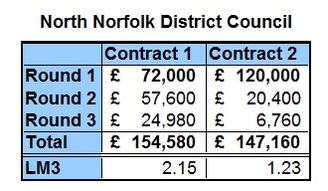
The flip side of this recognition is making it clearer which local businesses are super efficient at local procurement. When Norfolk District Council did a simple LM3 audit in 2004 the discovered that a contract worth £72,000 given to a local contractor yielded a local re-spend value of £154,580 after three 'rounds'.
In contrast a much larger contract of £120,000 given to a non-local contractor only generated £147,160.
The lesson? Less money spent wisely within our local system is of more value than more money spent in such a way that it easily leaks away.

Picture
Source: Norfolk District Council 2004
Rewarding the Positive
Food Loop is only interested in giving time and attention to those local food businesses that most actively demonstrate that they are re-spending your hard-earned food money well, with other local food businesses.
That means they will benefit from more publicity which will bring them to more peoples attention which, hopefully, will bring them more sales.
So one way to view the Food Loop points that you earn is as votes for your favorite local food businesses. And, if they continue to keep your Food Loop Pounds in local circulation they will continue to earn you extrea points as well.
But that a subject for a different article.
Picture
Illustration of a positive feedback loop
Michael Hallam
Monday 24 August 15

9 Comments

Food Loop has the potential to reverse the damage done by our debt-based financing system

7/14/2015

0 Comments

 
Picture
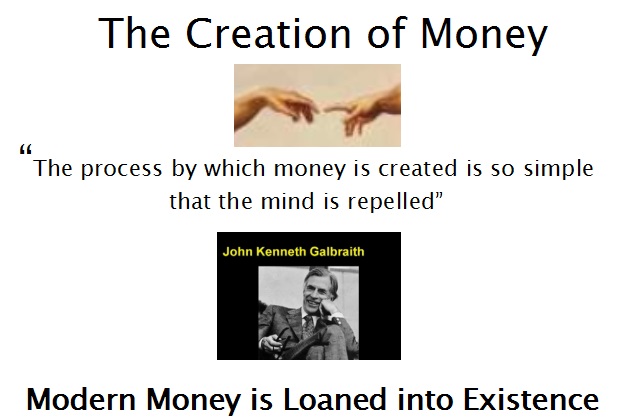
Yes that is correct. Modern money is loaned into existence as interest-bearing debt. If you own the right to create money in this way you need do nothing other than lend money to people who need money and your future wealth is assured.

Unfortunately for most of us we don't own and run a a bank so we are stuck with creating wealth the old fashioned way. By adding value to real goods and services. As the debt mountain grows our ability to service loans through doing an honest days work diminishes and we all end up feeling the pressure.

The Food Loop Game is designed to start a process that will antidote this negative situation we all find ourselves in. The antidote to lending money into existence as debt is to trade it into existence as we apply our collective skills and talents to add value to real goods and services.
Picture
With the Food Loop Game we are trying to encourage the money we have to stay for longer in our local food economy. Simply put, the more work our money does as it circulates around our local food economy the more vibrant that food economy, and the businesses that comprise it, will be.

At the end of the day it is not the money that creates the wealth it is the collective talents of all the people working in the food sector locally that create the food. The cash just facilitates the process. Lets all try to make sure that the Food Loop Project is a success so it can play a constructive part in helping our local food economy to thrive.
Michael H
0 Comments

WELCOME TO THE LANCASTER FOOD-LOOP GAME

4/21/2015

2 Comments

 
Picture
The Lancaster Food-loop game is an innovative and fun way to encourage local shoppers, restaurants, retailers, processors and producers to work together to strengthen the links in our local food chain.

As we do this we will also be strengthening our own local food economy within the 20 mile radius of Lancaster city centre.

Its easy to take part, fun to do and rewarding for all concerned.
So whose ready to play?

Michael Hallam
21 April 2015
2 Comments
    PARTNERS

    The Lancaster Food Loop Game is part of the Growing Our Local Food Economy (GOLFE) project run by LESS UK
    Picture
    Picture
    A BIG THANK YOU TO BACK ROOM SAM FOR DESIGNING OUR PEAR LOGO

    Author

    Michael Hallam is the founder of the Ethical Small Traders Association. He is actively working on projects to boost the local economy within the Lancaster & Morecambe area.

    Picture

    Archives

    June 2016
    March 2016
    December 2015
    October 2015
    August 2015
    July 2015
    April 2015

    Categories

    All

    RSS Feed

Powered by Create your own unique website with customizable templates.